Phone No: +20 101 580 8250
Email Address:info@spectraclinics.com

- Home
- Services
- Functional Medicine
- Functional Consultation
- Online Consultation
- Therapeutic Nutrition
- Functional Blood Tests
- Exosomes — Medical Information
- Developmental & Behavioral
- Behavioral Departments
- Applied Behavior Analysis (ABA)
- Speech & Language Therapy
- Occupational Therapy
- Feeding & Swallowing
- Early Intervention
- Drama Therapy & RDI
- Parenting Program (PCIT)
- Adapted Physical Education
- Academic & Learning Support
- Child Psychology
- Assessments & Technology
- Specialized Assessment
- Psychometry & Assessments
- Assessment Hub
- Trikombin
- Photobiomodulation (PBM)
- Physiospect
- OligoScan (SoCheck)
- Qest-4
- Equilios
- HRV Testing
- Tesla
- Integrated Programs
- Integrated Program
- Home Visits
- School Readiness
- Online Consultation
- Conditions We Treat
- Our Team
- Success Stories
- About Us
- Contact Us
A Comprehensive Guide to Learning Disabilities in Children
📅 June 14, 2026|✍️ Spectra Care Team|⏱ 8 min read|📍 Cairo, Egypt
✅ Key Takeaways
- Learning disabilities do not mean low intelligence — children can have average or above-average IQ.
- Early signs appear before school age: difficulty with multi-step instructions, memorizing songs, or recognizing letters.
- Main types: Dyslexia (reading), Dysgraphia (writing), Dyscalculia (math).
- Early intervention significantly improves academic outcomes and self-confidence.
- Treatment combines individualized education plans, behavioral support, and home exercises.
Quick Answer
Learning disabilities (LDs) are neurological conditions that affect how the brain processes reading, writing, or mathematics — independent of IQ or effort. The most common types are dyslexia (reading), dysgraphia (writing), and dyscalculia (maths). They affect approximately 1 in 5 children globally and are highly manageable with early diagnosis and specialist intervention.
Every child learns differently — but when a child consistently struggles with reading, writing, or mathematics despite genuine effort and adequate instruction, a learning disability (LD) may be the underlying cause. Learning disabilities are neurological differences in how the brain processes information — they are not a reflection of intelligence, effort, or parenting.
According to the International Dyslexia Association, approximately 15–20% of the global population has a language-based learning disability. In Cairo and across Egypt, growing awareness has helped more families recognise the signs early and access timely, evidence-based support.
What makes learning disabilities particularly challenging is that they are often invisible. Children with LDs typically have average or above-average intelligence, yet struggle in specific academic areas. This gap between potential and performance — if left unaddressed — can lead to low self-esteem, school avoidance, and long-term academic underachievement.
This guide covers everything parents in Egypt need to know: from recognising early warning signs and understanding different LD types, to navigating the diagnosis process in Cairo, accessing school support within Egypt’s inclusive-education framework, and choosing the right therapy. Whether your child is in nursery or secondary school, the information here will help you take the next step with confidence.
What Are Learning Disabilities in Children?
Learning disabilities are neurological disorders that affect how the brain processes, stores, and responds to information. They are not caused by low intelligence, poor parenting, or inadequate teaching. A child with a learning disability may have average or above-average intelligence while struggling significantly with specific academic tasks.
Key Fact: Learning disabilities are lifelong conditions — they do not disappear with age. However, with the right intervention, children can develop highly effective coping strategies and achieve their full potential.
Do Learning Disabilities Mean Low Intelligence?
No — and this is one of the most damaging myths. Many highly successful people — including renowned scientists, artists, and entrepreneurs — have had learning disabilities. Intelligence and learning disabilities are entirely separate dimensions. A child can score in the gifted range on an IQ test and still have significant difficulty with reading or written expression.
What makes learning disabilities complex is that a child’s potential often far exceeds their academic performance — which is why they are sometimes dismissed as lazy or unmotivated, when in reality their brain simply processes certain information differently.
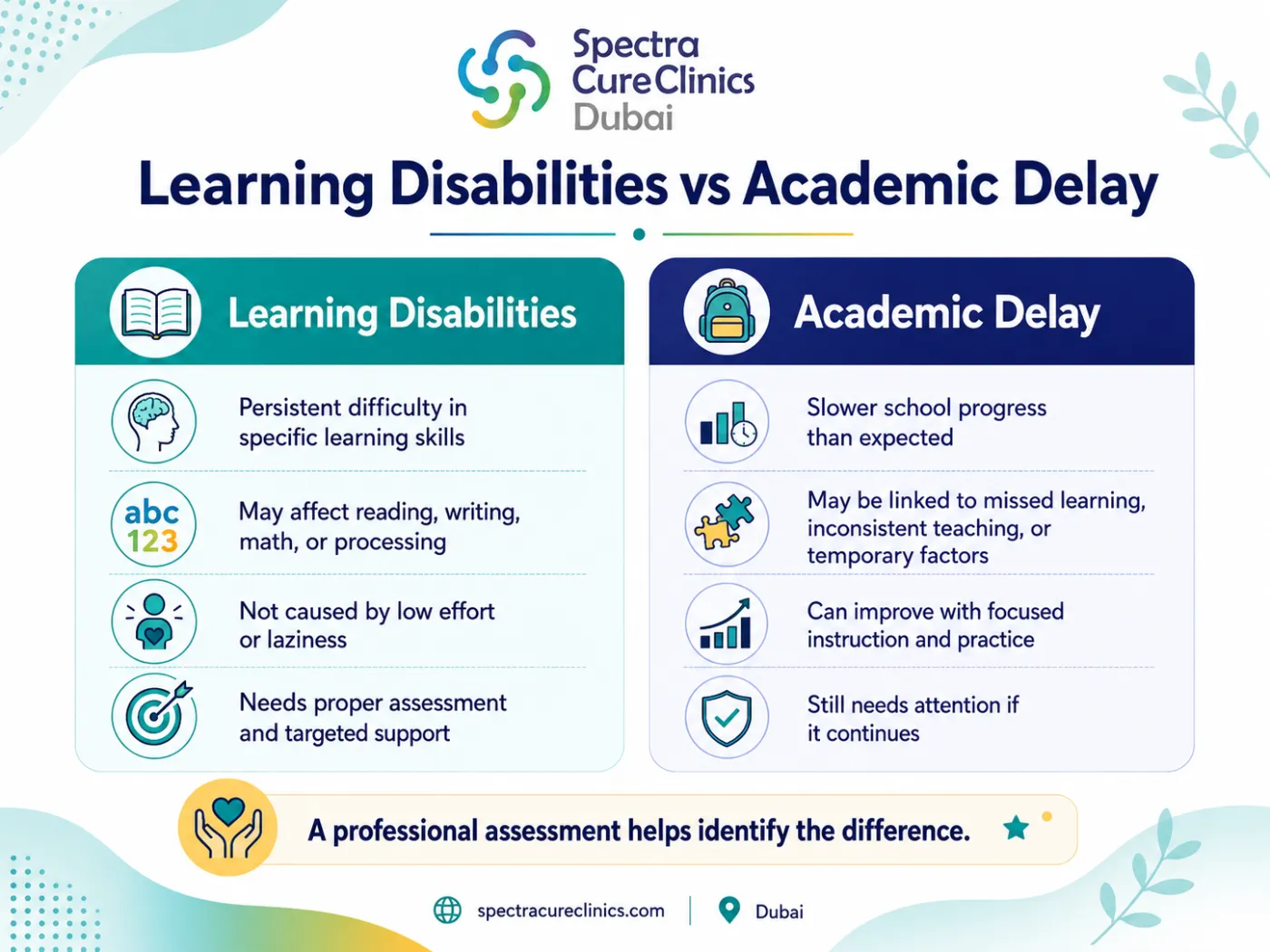
Learning Disabilities vs. Academic Delay
These two conditions are frequently confused, but they require very different types of support:
| Learning Disability | Academic Delay |
|---|---|
| Neurological in origin | May stem from missed schooling or environment |
| Persists despite quality instruction | Often improves with targeted tutoring or support |
| Requires formal assessment and IEP | May respond to curriculum adjustments |
| Specific to certain skills (reading, writing, math) | Affects overall academic performance more broadly |
In Cairo: A professional assessment at Spectra Cure Clinics helps determine whether your child has a true learning disability or a manageable academic gap — and the most effective support plan.
Many parents confuse a learning disability with a general academic delay or slow learning. The difference is important: a child with an academic delay struggles across most subjects and typically improves with extra time and practice. A child with a specific learning disability struggles in a defined area — such as reading or maths — but may perform at or above average in other areas. This uneven profile is a hallmark of a true LD and is exactly what a formal psychoeducational assessment is designed to detect.
How to Identify Learning Disabilities Early?
Early identification relies on recognizing patterns of difficulty that persist despite adequate support. Here are the key warning signs organized by age:
📅 Ages 3–5 (Preschool)
- ⚠ Difficulty learning the alphabet, colors, or basic numbers
- ⚠ Trouble rhyming words or following simple directions
- ⚠ Delayed speech and language development compared to peers
- ⚠ Problems remembering names of familiar objects
📚 Ages 6–9 (Early School Age)
- ➤ Struggles with reading and spelling despite regular practice
- ➤ Confuses similar-looking letters (b/d, p/q) beyond first grade
- ➤ Avoids writing tasks or complains of hand fatigue
- ➤ Has difficulty with basic math facts (addition, subtraction)
- ➤ Short attention span compared to peers of same age
🎓 Ages 10 and Older
- ◆ Reading comprehension significantly below grade level
- ◆ Written work is disorganized or consistently below expectations
- ◆ Strong verbal skills but poor written performance
- ◆ Signs of anxiety, low self-esteem, or school avoidance
Daily behavioral signs: easily frustrated with homework · avoids reading aloud · difficulty with multi-step instructions · excels in some areas (art, sports) but consistently struggles in academic tasks
When to Seek a Professional Assessment
If your child consistently shows three or more of the warning signs above for six weeks or longer — despite adequate classroom support — it is time to consult a specialist. A formal psychoeducational assessment can confirm or rule out a learning disability and guide the right intervention plan. The earlier the assessment, the better the outcomes.
At Spectra Cure Clinics in Cairo, our multidisciplinary team uses standardised diagnostic tools — including the WISC-V and WIAT-III — to assess cognitive and academic performance. Our reports can be used by schools across Cairo to support IEP applications and classroom accommodations.
Supporting a Child with Learning Disabilities at Home
Parents play a vital role in a child’s progress. While professional therapy provides the core intervention, the home environment reinforces learning every day. Effective home strategies include: reading aloud for 20 minutes daily, using colour-coded flashcards for spelling and multiplication, breaking tasks into small numbered steps, and praising effort rather than results.
Children with learning disabilities are not lazy and not unintelligent — their brains simply process information differently. With consistent support at home and targeted therapy at school or clinic, many children with LDs make measurable progress and go on to succeed academically and professionally.
Emotional Well-being and Self-Esteem in Children with Learning Disabilities
One of the most underestimated aspects of learning disabilities is their emotional impact. Children who repeatedly struggle in the classroom — despite trying their best — frequently develop feelings of shame, frustration, and low self-worth. Research shows that children with undiagnosed or unsupported learning disabilities are significantly more likely to experience anxiety, depression, and school refusal than their peers.
It is essential that parents and educators actively protect the child’s self-esteem alongside addressing their academic challenges. Practical emotional support strategies include:
- Celebrate non-academic strengths — art, sport, music, empathy, humour, and creativity are all genuine talents worth nurturing
- Use growth-mindset language — replace “I can’t do this” with “I can’t do this yet“
- Avoid comparing siblings or classmates — measure progress against the child’s own baseline, not others
- Connect them with role models — many highly successful people have learning disabilities, including renowned scientists, artists, and business leaders
- Seek peer support groups — in Cairo, several community groups exist for parents and children navigating learning differences
When emotional difficulties are severe — including persistent school refusal, social withdrawal, or signs of depression — a consultation with a child psychologist is strongly recommended alongside any educational therapy. Treating the whole child, not just the learning difficulty, leads to far better long-term outcomes.
Types of Learning Disabilities
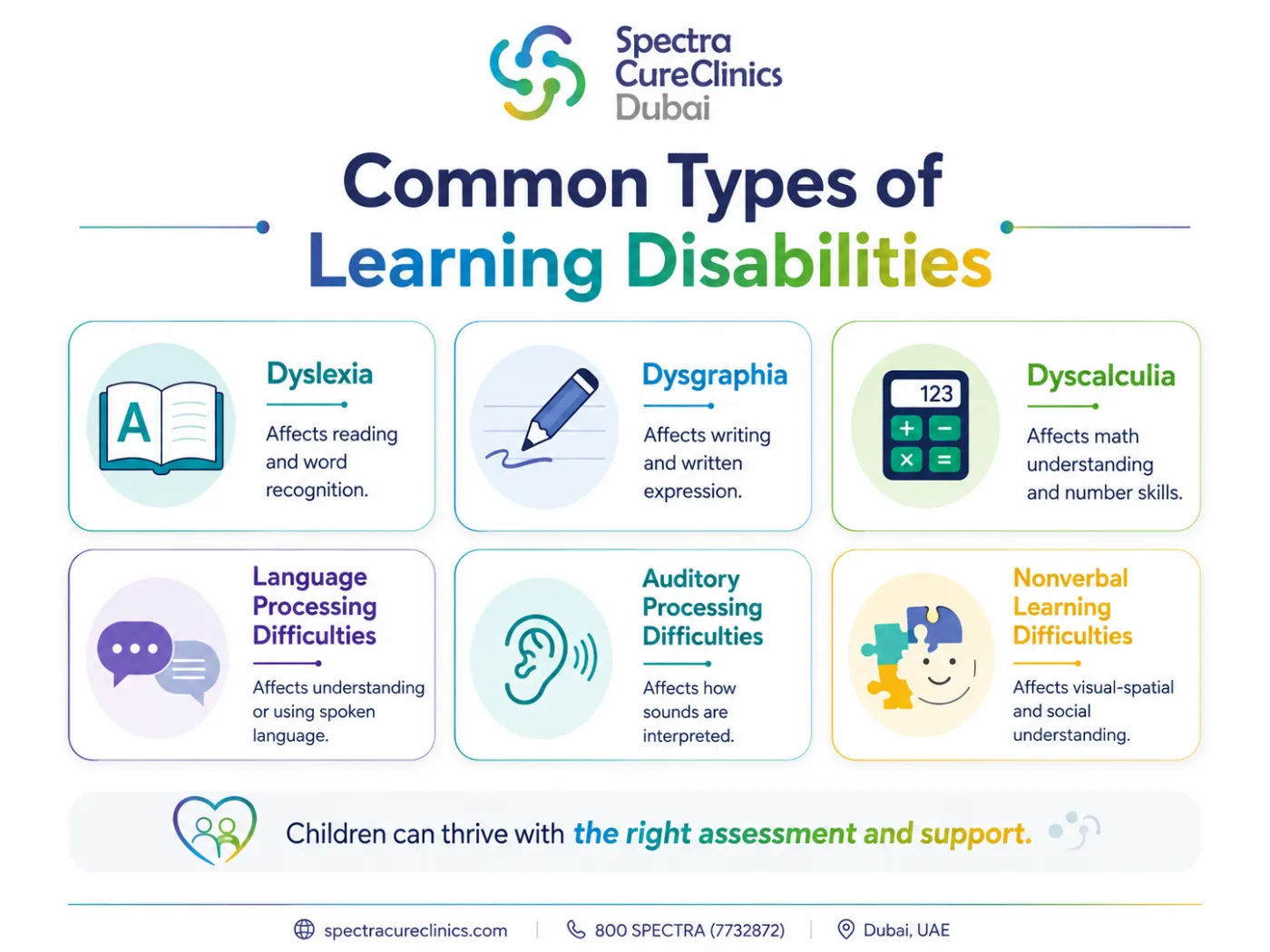
The three most common learning disabilities affecting school-aged children are dyslexia, dysgraphia, and dyscalculia. Each affects a different academic domain, and a child may have one or more simultaneously.
D | Dyslexia Most CommonDyslexia is a language-based learning disability that affects reading fluency, decoding, spelling, and phonological awareness — the ability to connect letters to sounds. It is the most common LD, affecting an estimated 1 in 10 children. Children with dyslexia may read slowly, skip or substitute words, struggle with spelling, and avoid reading aloud. Importantly, dyslexia has nothing to do with vision problems or intelligence. With structured literacy programmes (such as the Orton-Gillingham approach), children with dyslexia make significant and lasting progress. |
D | Dysgraphia Writing DisorderDysgraphia is a learning disability that affects written expression — including handwriting, spelling, grammar, and organising thoughts on paper. Children with dysgraphia often have messy, inconsistent handwriting, and may find written tasks disproportionately exhausting compared to verbal communication. Signs include: poor pencil grip, mixing upper and lower case letters, slow and laborious writing, and difficulty spacing words. Occupational therapy focusing on fine motor skills and written language strategies is the primary treatment approach for dysgraphia. |
D | Dyscalculia Maths DisorderDyscalculia is a specific learning disability affecting number sense, arithmetic operations, and mathematical reasoning. Children with dyscalculia struggle to understand the value of numbers, memorise times tables, tell the time, or handle money — despite repeated instruction. It is estimated to affect 3–7% of school-aged children. Like other LDs, dyscalculia is not caused by poor teaching or lack of effort — it reflects differences in how the brain processes numerical information. Specialised maths intervention using concrete, visual, and contextual methods has shown strong results. |
Learning Disabilities and Co-occurring Conditions
It is important to note that learning disabilities rarely occur in isolation. Research consistently shows that 30–50% of children with a primary learning disability also meet criteria for ADHD (Attention Deficit Hyperactivity Disorder). Other common co-occurring conditions include:
- Anxiety disorders — often secondary to academic frustration and social difficulties
- Developmental Coordination Disorder (DCD) — affecting fine and gross motor skills, commonly co-occurring with dysgraphia
- Autism Spectrum Disorder (ASD) — which can present alongside any of the three primary LDs
- Speech and Language Disorders — particularly common in children with dyslexia and dysgraphia
When multiple conditions are present, a multi-disciplinary assessment is essential. At Spectra Cure Clinics Egypt, assessments are conducted by a team that may include clinical psychologists, speech and language therapists, occupational therapists, and educational specialists — ensuring that no co-occurring difficulty is missed and that the intervention plan addresses the child’s complete profile.
Causes of Learning Disabilities
Learning disabilities are not caused by a single factor. Current research identifies multiple contributing causes:
Neurological Differences
Structural or functional differences in specific brain regions affect how information is processed
Genetic Factors
LDs tend to run in families — if a parent has dyslexia, a child is significantly more likely to have it too
Prenatal Exposure
Alcohol, certain drugs, or infections during pregnancy can affect brain development
Premature Birth
Preterm infants have a higher risk of learning and developmental challenges
Early Environment
Chronic stress, trauma, or limited language exposure can affect developing neural pathways
Best Ways to Treat Learning Disabilities
There is no single cure — but powerful, evidence-based interventions can significantly improve outcomes. The key is a personalized plan tailored to each child’s unique profile:
Individualized Education Plans (IEPs)
A customized plan developed by psychologists, teachers, and parents — outlining specific goals, accommodations (extended time, text-to-speech tools), and required support services.
Specialized Literacy & Numeracy Programs
Structured programs like Orton-Gillingham for dyslexia use explicit, systematic instruction. Far more effective than general remediation for children with specific learning disabilities.
Behavioral & Emotional Support
CBT, counseling, and social skills groups address the anxiety and low self-esteem that often develop as secondary effects of learning disabilities.
Home-Based Support Strategies
- Read aloud together daily to build language exposure
- Use audiobooks alongside printed text
- Break homework into small steps with regular breaks
- Focus on strengths — celebrate what the child does well
- Keep open communication with teachers about progress
Assistive Technology
Text-to-speech software, speech recognition, graphic organizers, and specialized reading apps dramatically reduce barriers while the child builds foundational skills.
How Are Learning Disabilities Diagnosed in Egypt?
In Egypt, a learning disability diagnosis is conducted through a psychoeducational assessment carried out by a licensed clinical psychologist or educational specialist. The evaluation typically includes:
- Cognitive (IQ) Testing — to establish baseline intellectual ability using standardised tools such as the WISC-V
- Academic Achievement Tests — measuring reading fluency, spelling, writing, and mathematical reasoning
- Behavioural and Emotional Screening — to rule out co-occurring conditions such as ADHD or anxiety
- Parent and Teacher Questionnaires — gathering observations from multiple environments
The resulting diagnostic report is a formal document that schools can use to put appropriate accommodations in place — such as extended exam time, a reduced workload, or in-class reading support.
What Parents in Cairo Should Know About School Support
Egypt has been steadily expanding inclusive education. Under the Rights of Persons with Disabilities Law (Law No. 10 of 2018) and the Ministry of Education’s inclusion initiatives, children with learning disabilities have a growing right to reasonable support within mainstream schools:
- Many national, language and international schools in Cairo accept a professional psychoeducational report as the basis for classroom accommodations.
- A formal diagnosis helps parents request support such as extended time, modified assessment, or an individual learning-support plan.
- The earlier the assessment, the sooner a child can access this support — and the stronger the long-term outcome.
Whatever your child’s school system, a timely, professionally conducted assessment is the gateway to the right support.
Learning Disabilities in Cairo: Key Statistics
- 15–20% of children globally have a language-based learning disability (IDA, 2024)
- Dyslexia is the most common, affecting up to 1 in 6 school-age children
- Children who receive intervention before age 8 show significantly better long-term outcomes than those who receive help later
- Up to 50% of children with learning disabilities also have co-occurring ADHD
- In Egypt, awareness and early identification of learning disabilities have increased substantially in recent years
Cairo School Support: What Parents Should Expect
In Cairo, a growing number of schools provide reasonable adjustments for students with diagnosed learning disabilities. Understanding your child’s rights can help you advocate effectively during school meetings. Key accommodations available in most Cairo schools include:
- Extended time on tests and examinations (typically 25–50% additional time)
- Separate room or low-distraction environment for assessments
- Reader or scribe services for children with severe dyslexia or dysgraphia
- Assistive technology such as text-to-speech tools and spell-checkers
- Modified homework loads and adapted learning materials
- Individual Education Plan (IEP) developed with specialist teachers and therapists
To access these accommodations, a formal psychoeducational assessment report is typically required. This report must be produced by a licensed clinical or educational psychologist and should include standardised test scores, a clear diagnosis, and specific recommendations. Schools under the MOE (Ministry of Education) system have their own inclusion framework but generally follow similar principles.
It is important to review and update the assessment every two to three years, as a child’s profile can change significantly with intervention. Parents should request annual IEP review meetings and should not hesitate to request additional support if progress stalls.
🏥 Is Your Child Struggling?
Early diagnosis and the right support plan make a measurable difference. Our specialists at Spectra Cure Clinics Egypt provide evidence-based Learning Difficulties Therapy tailored to each child.
Book an Assessment →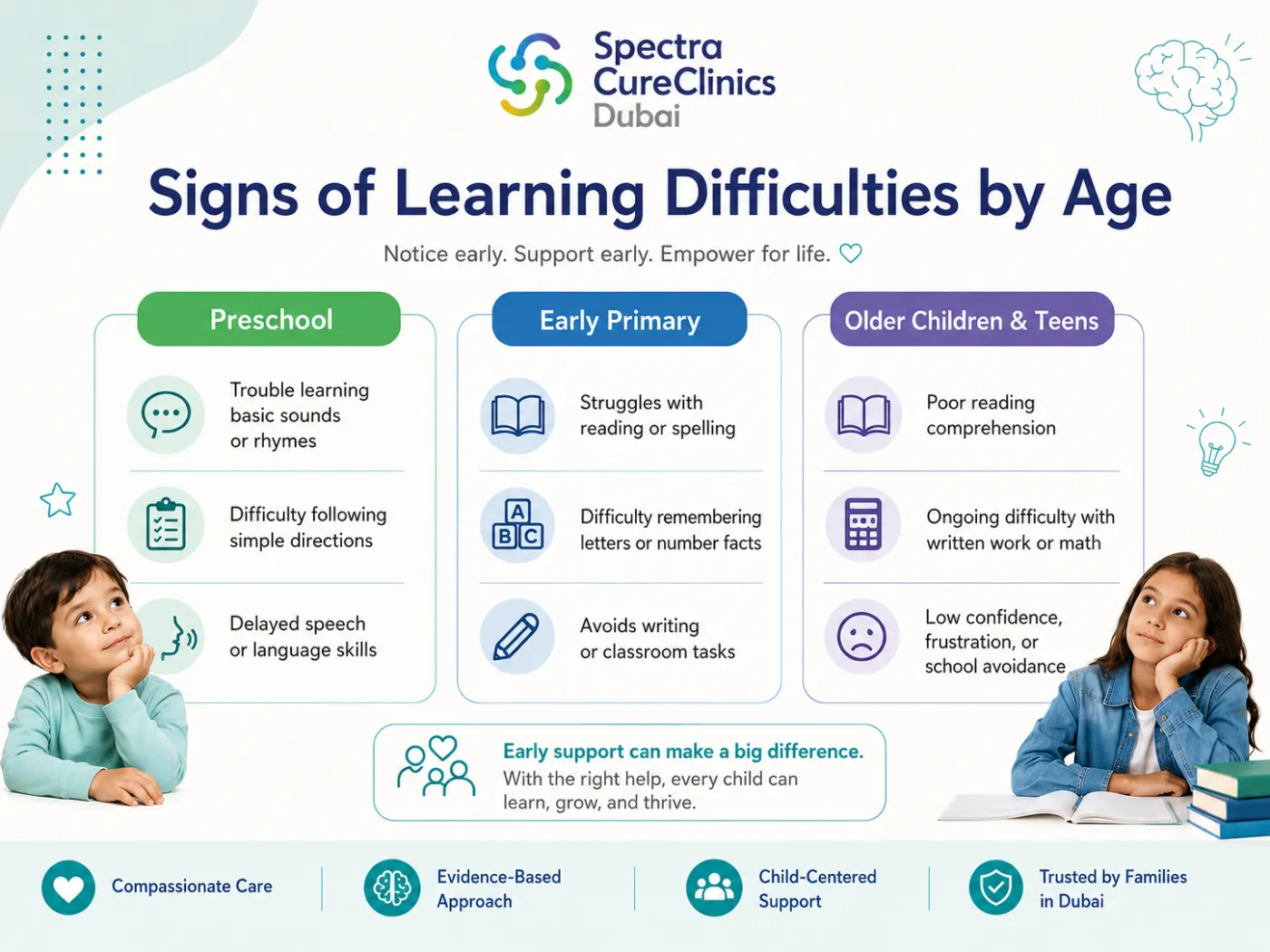
References & Further Reading
- Learning Disabilities Association of America (LDA) — ldaamerica.org
- International Dyslexia Association — dyslexiaida.org
- National Institute of Child Health and Human Development (NICHD) — nichd.nih.gov
- CDC — Developmental Disabilities — cdc.gov
- American Psychiatric Association. (2022). Diagnostic and Statistical Manual of Mental Disorders (5th ed., Text Revision). DSM-5-TR.
Frequently Asked Questions About Learning Disabilities in Children
A learning disability is not related to IQ. Children with learning disabilities often have average or above-average intelligence — their brains simply process certain types of information differently. Low intelligence refers to a global limitation in cognitive function, while an LD affects only specific areas (such as reading, writing, or math) while leaving other intellectual abilities intact. Many children with LDs are gifted in art, music, sports, or problem-solving.
Learning disabilities can be formally diagnosed from around age 5–6, once a child has had enough exposure to academic learning. However, early signs can appear as young as ages 3–4, such as delayed speech, difficulty learning the alphabet, or problems with rhyming. The earlier a diagnosis is made, the more effective the intervention. At Spectra Cure Clinics Egypt, we offer developmental assessments for children starting at age 3.
Learning disabilities are lifelong neurological differences — they cannot be “cured,” but they can be very effectively managed. With the right educational strategies, therapy, and support, most children with LDs learn to work around their challenges and achieve academic and personal success. Early intervention significantly improves outcomes. Many adults with LDs go on to successful careers in law, medicine, science, arts, and entrepreneurship.
Spectra Cure Clinics Egypt offers comprehensive psychoeducational assessments that evaluate cognitive ability, academic achievement, language processing, memory, attention, and executive function. Our evaluations are conducted by licensed child psychologists and educational specialists and include standardized tests such as the WISC-V, WIAT-III, and CTOPP-2. Parents receive a detailed report with diagnosis (where applicable) and a personalized intervention plan.
The duration of support depends on the type and severity of the learning disability, the child’s age, and how early intervention begins. Most children benefit from structured therapy sessions 2–3 times per week over a period of 6–18 months. Progress is regularly monitored and the plan adjusted accordingly. Younger children tend to show faster improvement due to the brain’s greater neuroplasticity. Parent involvement and school collaboration are also key factors in the pace of progress. We do not promise a fixed timeline for any child.
Yes. Spectra Cure Clinics Egypt serves families from diverse linguistic and cultural backgrounds. Our team includes Arabic-speaking therapists and educational specialists who can conduct assessments and deliver therapy in both English and Arabic. We also coordinate with Arabic-medium schools across Cairo to ensure our interventions align with the curriculum and learning environment your child is in.
Does Your Child Show Signs of a Learning Disability?
Our specialists at Spectra Cure Clinics Egypt provide comprehensive evaluations and individualized support plans for children with learning disabilities. Early assessment leads to better outcomes.

